Bragajoel Keynote Template: What to Check Before You Buy or Build Your Deck
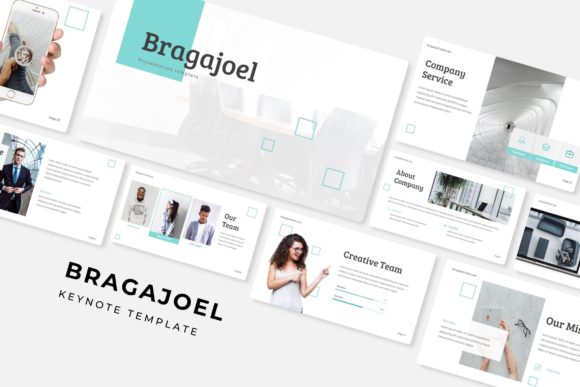
If you have been browsing presentation templates recently, you have likely come across the Bragajoel Keynote Template. It is a large, feature-rich package with 150 total slides, five premade color variations, and a structure that promises flexibility for everything from pitch decks to portfolio showcases. But a big slide count and colorful preview images do not automatically guarantee a smooth experience. Many people download a template like this and end up frustrated, with slides that feel disjointed or take too long to edit. Let us walk through what actually matters when you evaluate this template, what commonly goes wrong, and how to avoid those pitfalls so your final presentation looks polished and professional.
Understanding What the Bragajoel Keynote Template Actually Includes
The Bragajoel package offers five separate PPTX files, each with one of five premade color variations. That means you get 30 slides per color variant, totaling 150 slides across the whole set. The template also includes handcrafted infographics in PowerPoint, section break slides, gallery and portfolio slides, resizable and editable graphics with picture placeholders, and drag-and-drop functionality built on master slides. The illustrations are described as pixel-perfect, and the package comes with a Readme file that includes a link to download any free fonts used.
What many people miss is that the five color variations are not additional slide decks in the sense of completely different layouts. They are the same slide structures recolored. If you are expecting 150 unique slide designs, you will be disappointed. You are buying five coordinated color palettes applied to a core set of layouts. That is actually a strength if you understand it, but it becomes a point of confusion when users expect more variety than what is there.
Another common oversight involves the font link. The Readme file includes a link to a free font, but you need to download and install that font before you start editing. If you skip this step, your text may reflow awkwardly or fall back to a default font that breaks the visual rhythm. Take two minutes to handle this before you open any of the PPTX files.
The Mistake of Jumping Straight into Editing Without Checking Master Slides
The template is built on master slides. That is a major advantage because it allows you to make a change once and have it apply across every slide that uses that master. But if you do not understand how master slides work, you may find yourself manually adjusting the same element on dozens of slides. That defeats the purpose of using a template in the first place.
Before you start dropping in your own content, open the slide master view. Look at how the placeholders are arranged. Notice which elements are locked and which are editable. If you want to change the accent color across an entire color variant, you can do it at the master level rather than slide by slide. If you ignore this, you will waste hours on repetitive formatting that could have been handled in minutes.
A realistic example: Suppose you want to shift the primary heading color from dark blue to charcoal gray across your entire deck. If you edit each slide individually, you are looking at 30 rounds of formatting. If you adjust the master slide, it updates everywhere instantly. That is the kind of efficiency this template is designed to support, but only if you use it correctly.
Ignoring the Picture Placeholder Workflow
The template includes picture placeholders that allow drag-and-drop image insertion. This is a nice convenience feature, but it only works smoothly if you use images that match the placeholder aspect ratio. If you drop in a portrait-oriented photo into a landscape placeholder, the template will crop it automatically, and the result may cut off exactly what you wanted to show.
The better approach is to prepare your images beforehand. Check the dimensions of the placeholders in your chosen layout. Then crop or resize your photos to fit that ratio before you drag them in. This takes an extra minute per image but saves you from ugly, unintended cropping. If you are presenting a portfolio or gallery, this step is especially important because the visual impact depends on clean, intentional framing.
Also note that the photographs in the preview are not included in the download. That is standard practice, but it catches people off guard. Your own images will look different, so test one slide with your actual content before you commit to the entire deck. If the placeholder sizes or positions do not work well with your material, you may want to choose a different layout from the 30 available per color variant.
Overlooking the Section Break and Portfolio Slides
One of the most useful parts of the Bragajoel Keynote Template is the inclusion of section break slides and dedicated gallery or portfolio slides. These are not just decorative. They serve an important structural purpose in longer presentations. A section break signals a transition to a new topic. It gives your audience a mental reset and makes your deck easier to follow.
The mistake people make is either leaving these slides blank or treating them as afterthoughts. Instead, use the section break slides to state the next topic clearly. Keep the text minimal. A single word or short phrase with a strong background image is often enough. For portfolio slides, arrange your best work first. Group similar projects together. The template gives you the grid structure, but you still need to curate what goes into it.
If you skip the section breaks entirely, your presentation may feel like a wall of information. The audience loses track of where they are. The template gives you the tool; using it intentionally is up to you.
Choosing the Wrong Color Variation for Your Context
The five premade color options cover a range of moods, but not every color works for every audience or setting. A bright, saturated palette might feel energetic for a creative pitch but could come across as unprofessional in a corporate boardroom. A muted, neutral palette may feel safe but could be forgettable in a competitive pitch situation.
Before you settle on a color variant, think about your audience and your message. If you are presenting financial data to investors, a conservative palette with clean contrast supports credibility. If you are launching a consumer brand, a bolder palette might reinforce your brand personality. The template gives you five starting points, but you can also modify colors at the master level if none of the options feel quite right. Just be careful not to mix elements from different color variants within the same deck. That can produce a mismatched look even if the layouts are consistent.
Another practical consideration: test how your chosen color variant looks on a projector or large screen. Colors that appear vibrant on your laptop monitor may wash out in a bright room. High contrast between text and background is always safer than subtle variations that rely on precise screen calibration.
Relying Too Heavily on the Infographics Without Customizing Them
The handcrafted infographics in the template are a highlight. They can save you significant time compared to building charts and diagrams from scratch. But if you drop them into your presentation without tailoring the data and messaging, they become decoration rather than communication.
The most common mistake is leaving the placeholder text and generic labels in place. Even if you replace the numbers, the narrative may not match your story. Take the time to rewrite the supporting text. Adjust the hierarchy of information. If an infographic has five steps but your process has only three, remove the extra elements rather than leaving them empty or forcing unrelated content into them.
Also check that the infographic style aligns with the rest of your deck. The illustrations are pixel-perfect within themselves, but they may use visual metaphors that do not fit your industry or message. A diagram about growth using plant imagery works well for a sustainability topic but may feel out of place for a software development presentation. You are allowed to simplify or replace infographic elements if they do not serve your point.
Underestimating the Importance of Font Consistency
The Readme file includes a link to a free font used in the template. Download it and install it before you begin. If you open the file without the correct font installed, PowerPoint will substitute a fallback font. That substitution can alter spacing, line breaks, and overall visual balance. Even if you think the fallback looks acceptable, it may break the relationship between headings, body text, and captions that the template designer carefully calibrated.
If you prefer to use a different font, that is fine, but plan for it. Change the font at the master slide level so it applies uniformly. Then review every slide for text overflow or awkward line breaks. A font that works well at one size may cause problems at another, especially in slide titles or infographic labels. Give yourself time to check this rather than discovering it minutes before your presentation.
Not Testing the Template with Your Actual Content Before the Final Deadline
This is probably the most overlooked step. People see the preview images, download the template, start inserting their content, and assume it will work seamlessly. Then they hit a slide where the placeholder does not accommodate their text length, or an image crops poorly, or a layout that looked great in the preview feels cramped with real data.
Build a test deck with three to five slides using your actual content. Use different slide types: a title slide, a section break, a content slide with bullet points, an infographic, and a portfolio slide. See how each one handles your material. If something does not work, you still have time to choose a different layout from the 30 available per color variant or modify the master slide to better suit your needs.
This test also reveals whether the template's visual style actually complements your message. Sometimes a template that looks beautiful in isolation feels mismatched once you add your own words and images. It is better to discover this early than to invest hours into a deck that never quite clicks.
Making the Most of the Resizable and Editable Graphics
The template advertises resizable and editable graphics, and that is a real advantage if you use it. But resizing graphics without maintaining proportions is a common error. If you stretch a shape or icon horizontally, it can look distorted and amateurish. Always hold the Shift key (or use the aspect ratio lock in PowerPoint) when resizing.
Editable graphics also mean you can change colors, adjust line weights, or remove elements you do not need. This is especially useful if you want to align the template visuals with your brand colors beyond the five premade options. But keep in mind that some graphics may be grouped. You may need to ungroup them to edit individual parts. After ungrouping, be careful not to accidentally move elements that were previously aligned. Use the alignment tools in PowerPoint to maintain clean positioning.
Final Thought on Choosing and Using the Bragajoel Keynote Template
The Bragajoel Keynote Template offers a solid foundation for a wide range of presentations, provided you approach it with realistic expectations. The 150 slides are five color variations of the same core layouts, not 150 unique designs. The infographics, portfolio slides, and section breaks are tools that work best when customized thoughtfully. Master slides, correct fonts, and prepared images are the difference between a presentation that looks put together and one that looks like a template.
If you take the time to understand how the template is built, prepare your assets in advance, and test your content before the final deadline, you can produce a professional deck without starting from scratch. Avoid the shortcuts that lead to frustration, and you will get the value that the template is designed to deliver.