Cettrone Google Slide Template: A Versatile Presentation Solution for Modern Creators
In a landscape where visual communication often determines whether a message lands or gets lost, the tools we use to build presentations matter more than ever. The Cettrone Google Slide Template arrives as a thoughtful response to a common pain point: the gap between wanting a polished, professional deck and having the time or design skill to build one from scratch. For entrepreneurs, educators, freelancers, and marketing teams who regularly craft slides for pitches, reports, portfolios, or client meetings, this template offers a structured yet flexible foundation that respects both creative ambition and practical deadlines.
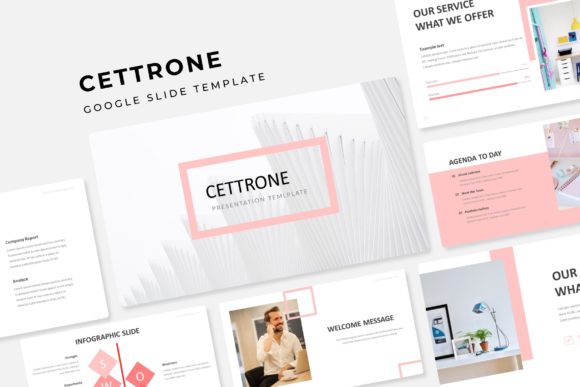
What sets Cettrone apart is not just its visual polish but the deliberate architecture behind it. With 150 total slides organized into 5 premade color variations—each containing 30 slides—the template acknowledges that a single presentation rarely serves every context. A pitch deck for investors demands a different mood than an internal training module or a client portfolio review. By providing five distinct color families, Cettrone allows users to shift tone and emphasis without rebuilding the entire deck. This modular approach reflects a broader shift in how professionals now think about presentations: not as one-off artifacts but as reusable systems that can be adapted, remixed, and scaled across different audiences and channels.
Why Presentation Templates Are Gaining New Relevance
The way people consume information has changed noticeably in recent years. Audiences are more visually literate, more impatient with clutter, and more likely to disengage when slides feel generic or dated. At the same time, remote and hybrid work environments have made slides a primary communication medium—not just a supporting visual for a spoken presentation but often the main artifact that gets shared, reviewed, and circulated independently.
This shift has raised the bar for what a presentation needs to deliver. It must be clear enough to stand alone when viewed without a narrator, yet dynamic enough to support a live speaker. It must feel custom without requiring a designer’s skill set. And it must be fast to produce. The Cettrone Google Slide Template speaks directly to these evolving expectations. Its handcrafted infographic elements provide data visualization that is both accurate and visually engaging, while the section break slides help structure longer decks into digestible chapters—a feature particularly valuable for training materials, course content, or detailed business proposals.
Another factor driving renewed interest in templates like Cettrone is the democratization of design tools. Professionals who once relied on in-house creative teams or expensive freelancers now regularly build their own materials. This trend has created demand for templates that go beyond basic placeholder layouts and offer genuine design thinking—balanced compositions, thoughtful typography, and consistent visual rhythm. Cettrone’s pixel-perfect illustrations and master slide-based structure reflect this level of craftsmanship, giving users a head start that feels substantial rather than superficial.
Breaking Down the 150-Slide Architecture
The sheer volume of 150 slides may seem overwhelming at first glance, but the organization reveals a practical logic. Each of the 5 color variations includes 30 slides, meaning users are not faced with a monolithic file but rather a series of cohesive mini-templates. This structure allows for efficient browsing: if you know you are building a presentation for a creative brand review, you can gravitate toward the color variant that matches that energy. For a more conservative quarterly report, a different color family steps in.
Within each 30-slide set, the layout variety covers a wide range of common use cases. Title slides, content layouts, gallery and portfolio slides, data charts, infographic pages, and transition slides are all represented. This breadth reduces the need to hunt for external assets or improvise layouts mid-deck. The inclusion of resizable and editable graphics with picture placeholders means that dragging and dropping images into the template preserves the intended composition—a small detail that saves significant time when working under pressure.
For users who build presentations regularly, this template also functions as a kind of visual system. Once you become familiar with the layout logic in one color variant, you carry that understanding across the others. The master slide foundation ensures that global changes—like updating a logo or adjusting a font—propagate consistently, which is especially useful when repurposing the same base content for different clients or departments.
Practical Implications for Different User Profiles
The value of the Cettrone Google Slide Template manifests differently depending on who is using it and why. Consider a marketing consultant preparing a brand audit for a retail client. The ability to pull from 5 premade color themes means the presentation can be aligned with the client’s brand palette without starting from zero. The gallery and portfolio slide options make it straightforward to showcase campaign visuals, product shots, or before-and-after examples. The consultant saves hours that would otherwise be spent on formatting and can instead focus on strategy and insights.
For educators developing course materials, the section break slides are particularly useful. They create clear visual pauses between modules or topics, helping learners track their progress through the material. The handcrafted infographic layouts allow complex concepts—like a timeline of historical events or a flowchart of a scientific process—to be presented in a way that is both accurate and memorable. And because the template is built on master slides, updating the course deck term after term becomes a matter of swapping content rather than redesigning pages.
Freelancers and small business owners often face the challenge of maintaining a professional image while working with limited resources. Cettrone offers a pragmatic middle ground: the presentation looks custom-made, but the user does not need advanced design software or training. The resizable and editable graphics mean that even users with minimal design experience can adjust scale, position, and composition without breaking the layout. The drag-and-drop picture placeholders lower the technical barrier further, making the template accessible to anyone who can use Google Slides.
How the Template Fits Modern Workflows
One of the less obvious strengths of the Cettrone Google Slide Template is how it aligns with the way many professionals now work. Collaborative editing, cloud-based file sharing, and real-time feedback are standard expectations. Google Slides is native to this environment, and a template built for it inherits those advantages automatically. Teams can work on the same deck simultaneously, leave comments, and track revisions—all while preserving the template’s design integrity.
The inclusion of 5 PPTX files in widescreen format alongside the Google Slides version adds cross-platform flexibility. Users who need to deliver a presentation in PowerPoint—perhaps because a client or conference organizer requires it—can do so without reformatting. The Readme First document and free font download link further streamline setup, addressing common friction points like missing fonts or unclear instructions. These details may seem small, but they reflect an understanding of real-world usage, where time is scarce and technical hiccups are costly.
It is also worth noting what the template does not include. The preview images feature photographs for illustration purposes only, and those images are not part of the purchase. This is standard practice but worth understanding: the template provides the structure, layout, and design elements, while users supply their own imagery. This separation actually gives the user more control over the final look, as they can select photographs that are on-brand, relevant, and appropriately licensed. The template becomes a container for the user’s content rather than a fixed composition that resists customization.
Observing the Larger Shift in Presentation Culture
Beyond the specific features, the existence of a template like Cettrone reflects a broader shift in how professionals think about presentations. The old model treated slides as a static byproduct of a talk—something thrown together quickly, often text-heavy, and rarely revisited. The emerging model treats presentations as reusable assets that circulate independently, support multiple formats, and contribute to a consistent brand presence over time. This is why features like 5 color variations and master slide-based editing resonate: they support a more systematic, strategic approach to visual communication.
There is also a growing awareness that good design is not about decoration but about clarity. A well-structured slide helps the audience absorb information faster, retain it longer, and respond more thoughtfully. The pixel-perfect illustrations in Cettrone are not merely decorative; they serve a communicative purpose, guiding the eye to key points and creating visual hierarchy. The infographic elements translate data into patterns that are easier to grasp than raw numbers in a table. These are not aesthetic preferences—they are cognitive tools that improve the effectiveness of the message.
At the same time, the market for presentation templates has matured. Users have become discerning. They can tell when a template is a thin collection of generic layouts versus a thoughtfully constructed system. Cettrone positions itself in the latter category, and its reception among professionals will likely depend on whether it delivers on the promise of saving time without sacrificing quality. The features listed—150 slides, 5 premade colors, handcrafted infographics, section breaks, gallery layouts, resizable graphics, picture placeholders, master slide structure, pixel-perfect illustrations—suggest a comprehensive offering, but the real test is in the using.
Practical Recommendations for Getting Started
For anyone considering the Cettrone Google Slide Template, a few practical suggestions may help maximize its value. First, take the time to review all 150 slides across the different color variants before building your deck. This upfront investment pays dividends later because it helps you understand the full range of layouts available and avoids the common mistake of reusing the same two or three slide types out of familiarity.
Second, install the recommended fonts early. The free font download link provided in the documentation ensures that your presentation renders as intended, both in Google Slides and in any exported formats. Skipping this step can lead to unexpected formatting shifts that undermine the template’s visual consistency.
Third, treat the template as a starting point rather than a cage. The editable graphics and resizable elements invite customization. Adjust colors, move elements around, or combine layouts from different color variants if that serves your content better. The template works best when it enhances your message rather than constraining it.
Finally, remember that the imagery you supply is as important as the template’s design. High-quality, relevant photographs that align with your brand or topic will make the difference between a presentation that looks good and one that looks professional. The template provides the stage; your content provides the performance.
The Cettrone Google Slide Template is not a magic solution—no template can replace clear thinking, solid content, or authentic delivery. But for professionals who need to produce polished presentations consistently, it offers a practical shortcut that respects both time and taste. In a world where visual communication is no longer optional, having a reliable design system in your toolkit is less a luxury and more a necessity. Cettrone makes that necessity feel a little less burdensome and a little more creative.