How a Chess Tournament Social Media Post Can Transform Your Event Promotion
There's something special about chess. It's a game that cuts across generations, cultures, and skill levels. Whether you're organizing a local club match, a school championship, or a regional open, getting the word out in the right way can make all the difference. That's where a Chess Tournament Social Media Post comes into play—not just as a simple announcement, but as a tool that can shape how people perceive your event, who shows up, and how engaged your audience feels before the first move is even made.
More Than Just a Flyer: The Real Value of a Dedicated Template
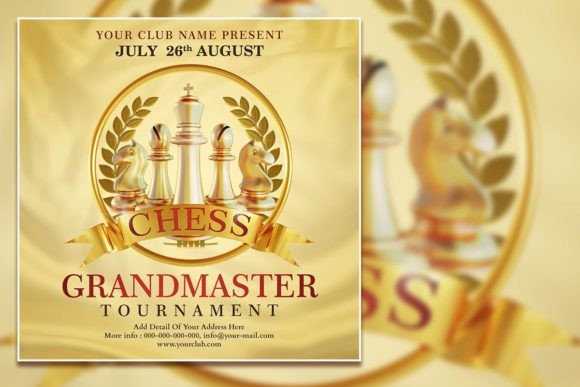
A chess tournament isn't just another community gathering. It's an event that attracts a specific kind of attention—strategic thinkers, families looking for intellectual recreation, and even corporate teams seeking a different kind of team-building challenge. A generic social media post often fails to capture that distinct atmosphere. A well-designed Chess Tournament Social Media Post, especially when built from a quality editable PSD template, gives you a head start. You're not starting from scratch. You're taking a proven visual structure—complete with balanced typography, chess-appropriate color schemes, and smart layout choices—and making it your own.
The editable nature of these templates is a huge advantage. You can swap out the placeholder photo for your own event imagery: a shot of last year's winner deep in thought, a close-up of hands moving pieces, or even just the venue with boards set up. That personal touch signals authenticity. People scrolling through their feeds can tell the difference between a recycled stock image and something real.
Real-World Scenarios Where This Works Best
Let's walk through a few situations where a Chess Tournament Social Media Post becomes more than just a graphic—it becomes a key part of your outreach strategy.
Local Community Clubs and Libraries
Imagine you run a monthly chess night at your local library. Your audience is neighborhood families, retirees, and curious teens. A templated post lets you quickly update the date, time, and any special themes (like a "speed chess challenge" or "beginner-friendly session") without needing design skills. You can post it on the library's Facebook page, in local community groups, and even print a physical copy to display near the entrance. The consistent branding from month to month helps regulars recognize the event instantly. Over time, that familiar look builds anticipation.
School and University Tournaments
Schools often need to communicate with both students and parents. A tournament hosted by the chess club benefits from a flyer that feels official and exciting. With a Chess Tournament Social Media Post template, you can include QR codes linking to registration forms, embed school logos, and highlight prize information. For parents, the professionalism of the design reassures them that the event is well-organized. For students, the visual appeal—maybe a striking board motif or a dynamic chess piece graphic—makes it shareable among their friends on social media.
Corporate Team-Building Events
More companies are incorporating chess into their wellness and team-building programs. It encourages strategic thinking and patience. A corporate event needs a different tone: clean, professional, but still inviting. An editable template lets you adjust the messaging. Instead of "Grand Prix Open," you might say "Strategic Thinking Workshop with Chess." The same layout, the same high-resolution quality, but with text tailored to a business audience. You can also change the color palette to match your company's branding.
Regional and State-Level Competitions
When you're running a larger, more formal tournament, the stakes are higher. Players travel, registration fees are involved, and you need to attract serious competitors. Here, the template's 300 dpi resolution and 2000 x 2000 pixel dimensions really matter. You're producing material that looks sharp both online and in print. You can create multiple posts for different phases: early bird registration, deadline reminders, player spotlights, and the final call. Each variation keeps the same visual identity, which builds a cohesive campaign across your social channels.
Who Benefits and How They Use It Differently
Different people approach chess promotion from different angles. Understanding these perspectives helps you get more value out of your Chess Tournament Social Media Post template.
- Tournament organizers need speed and consistency. They're often juggling logistics, pairings, and venue details. A template reduces the time spent on design. They can generate a polished post in minutes, then focus on the actual event management.
- Volunteers and club officers may not have graphic design experience. The organized layers in the PSD file make it easy to find and edit text boxes, move elements, and swap images without breaking the layout. This lowers the barrier to creating professional-looking material.
- Coaches and educators often promote events through multiple channels: school newsletters, parent emails, and local Facebook groups. Having a single template that works across these platforms—as a social media post, a printable flyer, or even a digital banner—saves time and keeps messaging unified.
- Small business owners who host chess nights at their cafés or game stores can use these templates to build a regular community. A weekly post with updated details (like specials on coffee or late-night hours) encourages repeat attendance. The editable text tool makes it simple to change the date and add new info each week.
Practical Considerations Before You Start Editing
Before you dive into Photoshop and start tweaking your Chess Tournament Social Media Post, there are a few things worth thinking about. These aren't obstacles, just practical steps that make the process smoother.
Know your platform. Instagram and Facebook both handle square images well—2000 x 2000 pixels is a safe bet. But if you're planning to post on LinkedIn or Twitter, you might want to consider slightly different aspect ratios for maximum engagement. The template's size works great as a base, but you can crop or re-frame for other platforms without losing quality thanks to the high resolution.
Font consistency matters. The template comes with specific typefaces already placed. When you change the text, you can either keep the existing font or choose a new one. If you do switch, make sure the new font matches the mood of your event. A playful script might work for a casual community gathering but feel out of place for a state championship. Stick with clean, readable fonts for the main information—date, time, location—and save decorative styles for secondary elements.
Color psychology is real. Chess visuals often lean toward dark greens, deep blues, and classic black-and-white. These colors evoke focus, tradition, and intelligence. But you're not locked in. If your event has a theme—like a "Spooky Chess Night" in October or a "Summer Open"—adjust the colors accordingly. The RGB color mode in the template is perfect for digital screens, so your edited colors will appear vibrant and accurate.
Photography choice. The "replace with your photo" feature is arguably the most powerful part of this template. A generic chess piece image is fine, but a real photo from a previous event creates emotional connection. Show people smiling, concentrating, or celebrating a win. That human element is what stops the scroll on social media. If you don't have a photo yet, consider staging one: a few players around a board, a hand making a move, or even just the empty boards set up and waiting.
Strengths and Potential Limitations
No template is a magic bullet, and being honest about what this approach can and cannot do helps you use it more effectively.
Strengths: The instant download nature means you can start editing within minutes. The organized layers in the PSD make it easy to find exactly what you need to change. The 300 dpi resolution ensures that if you decide to print physical copies for the venue, they'll look crisp and professional. The square format is versatile across major social platforms. And because all text is editable, you can reuse the same base design for multiple events throughout the year, changing only the details.
Potential limitations: The template requires Adobe Photoshop. If you don't have access to that software, you'll need to find a friend who does or explore alternatives. Also, while the template gives you a great starting point, it still requires your input—the photo, the specific event details, and the tone of the copy. A template won't write your captions or engage with your audience in the comments. It's a tool, not a full marketing strategy. Finally, if you're promoting a very niche event—like a chess tournament for a specific professional group or a charity fundraiser—you may need to customize the design more heavily to reflect that unique angle.
Making It Work in Your Real Life
The best way to see the value of a Chess Tournament Social Media Post template is to think about your next event. What's the one thing you want people to know? Is it the date? The prize? The location? The guest of honor? Lead with that. Use the template's hierarchy to place your most important information front and center.
Consider pairing your social media post with a short caption that tells a mini-story. Maybe mention a memorable moment from last year's tournament. Or share a fun chess fact that relates to your event. The graphic gets attention, but the caption builds connection. Together, they create a post that feels both professional and personal.
And don't be afraid to iterate. If the first post doesn't get the engagement you hoped for, try a different photo. Adjust the color scheme. Change the headline. With an editable template, each variation takes minimal time, so you can experiment until you find what resonates with your audience.
Whether you're promoting a small club meeting or a big regional competition, the right visual can make your event feel real and exciting. A quality template gives you that visual power without the steep learning curve. You still bring the creativity and the context. The template just makes sure it looks the part.